- CA LIC# 957496
- medinaplumbingco@gmail.com
Radiant heating is invisible once the floor goes down, which makes it genuinely hard to picture. This page shows what each type of system is, where it suits and what is actually going in beneath your feet.
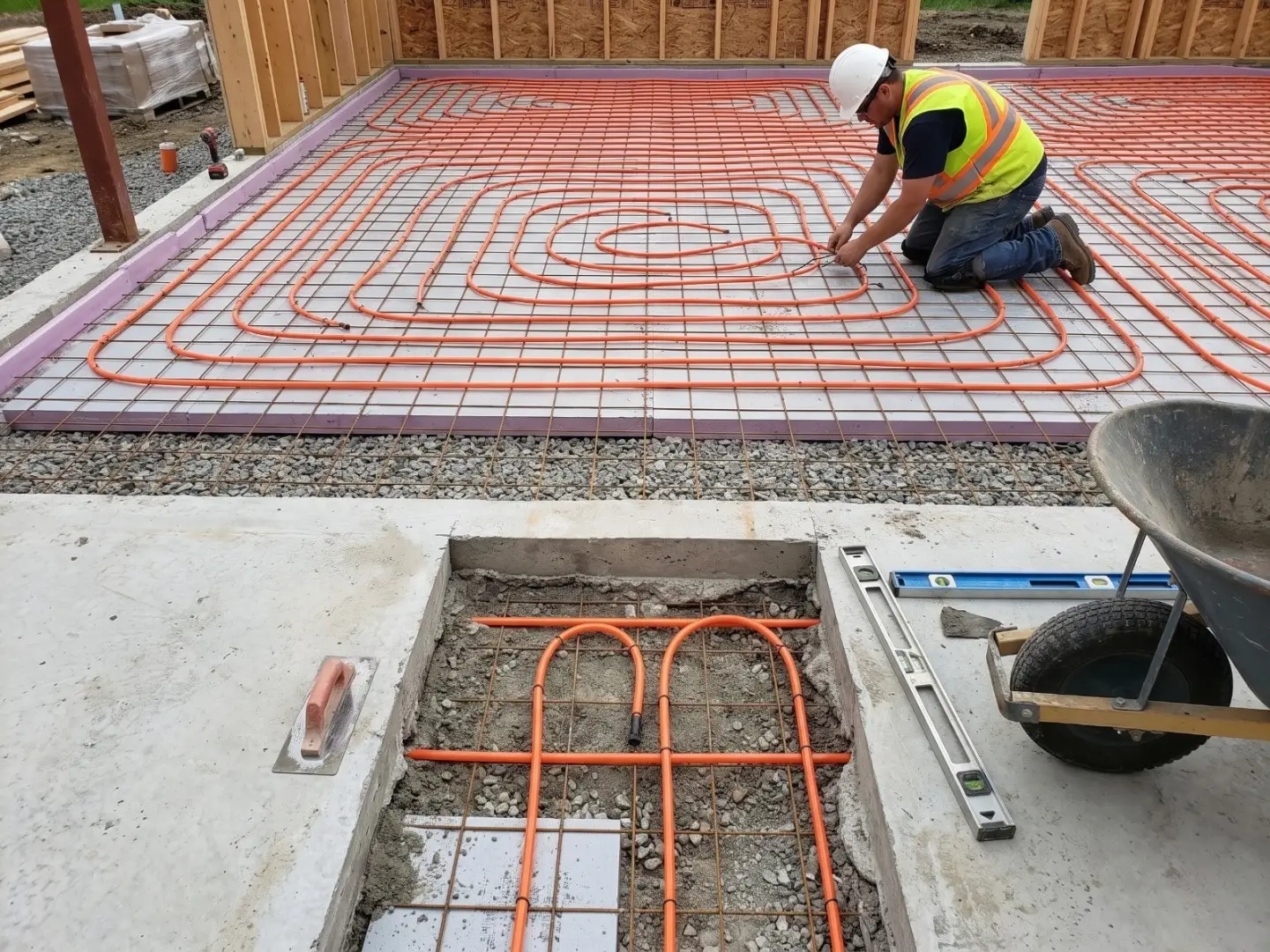
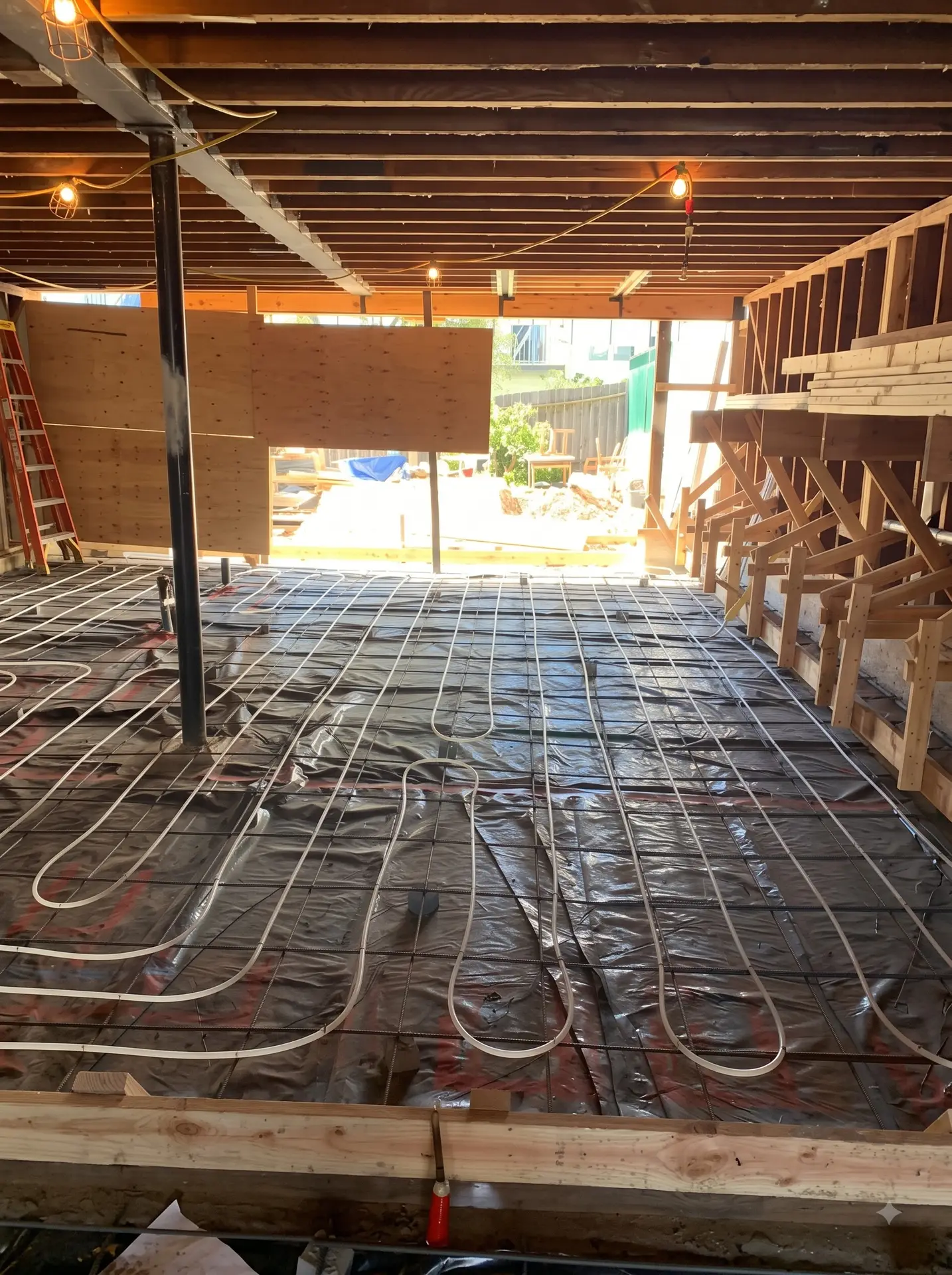
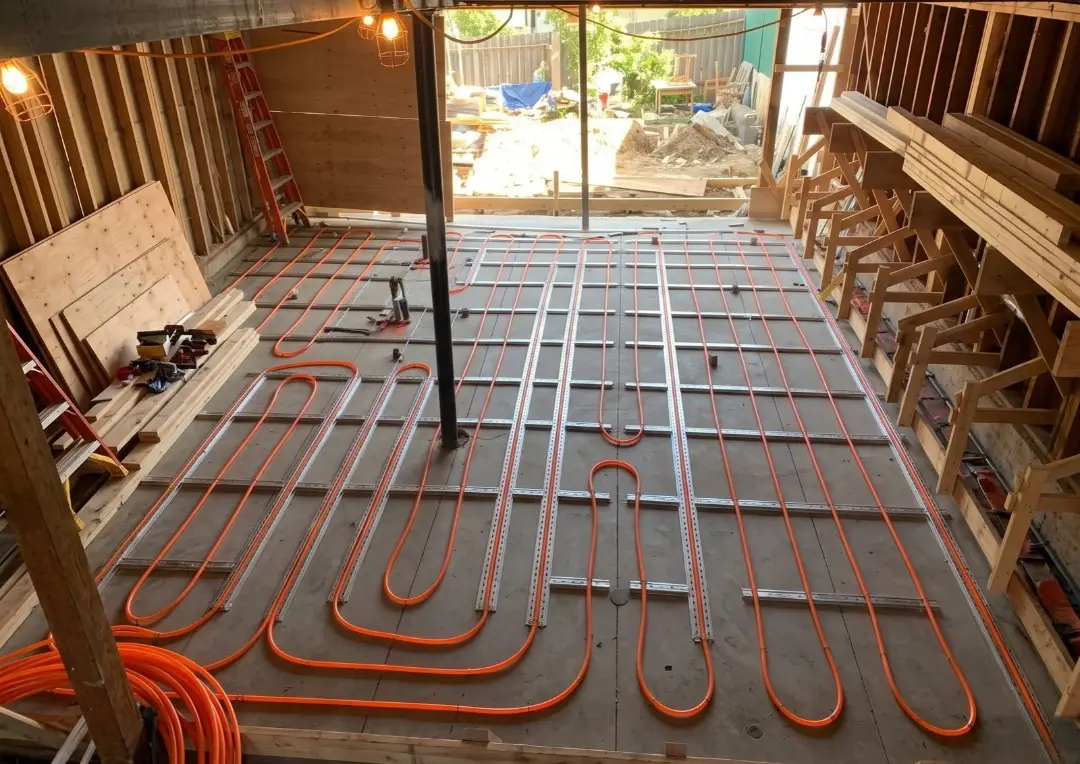
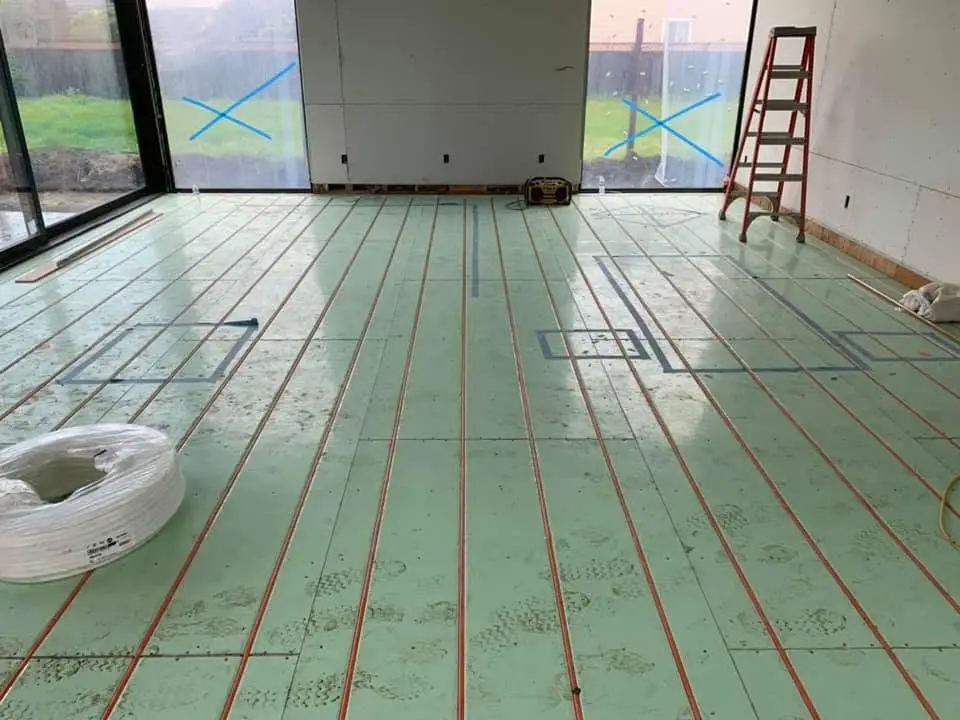
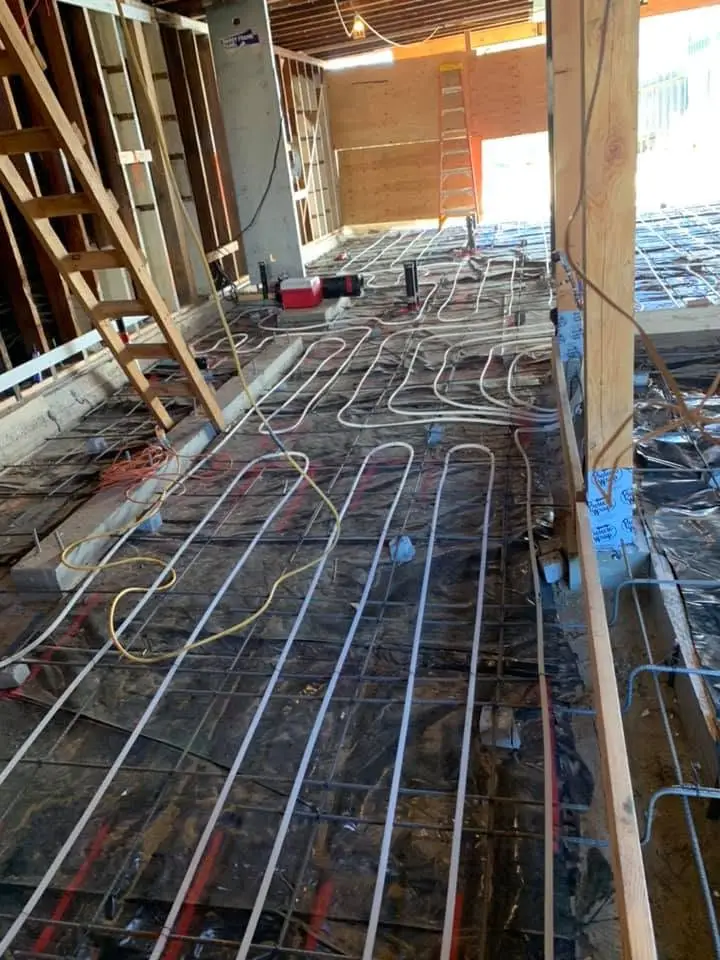
Piping runs through the floor itself, so the floor becomes the heater. In new construction it goes into the slab before the pour; in a remodel it goes into a thin overpour above the existing subfloor. Either way it is permanent, which is why the design comes first.
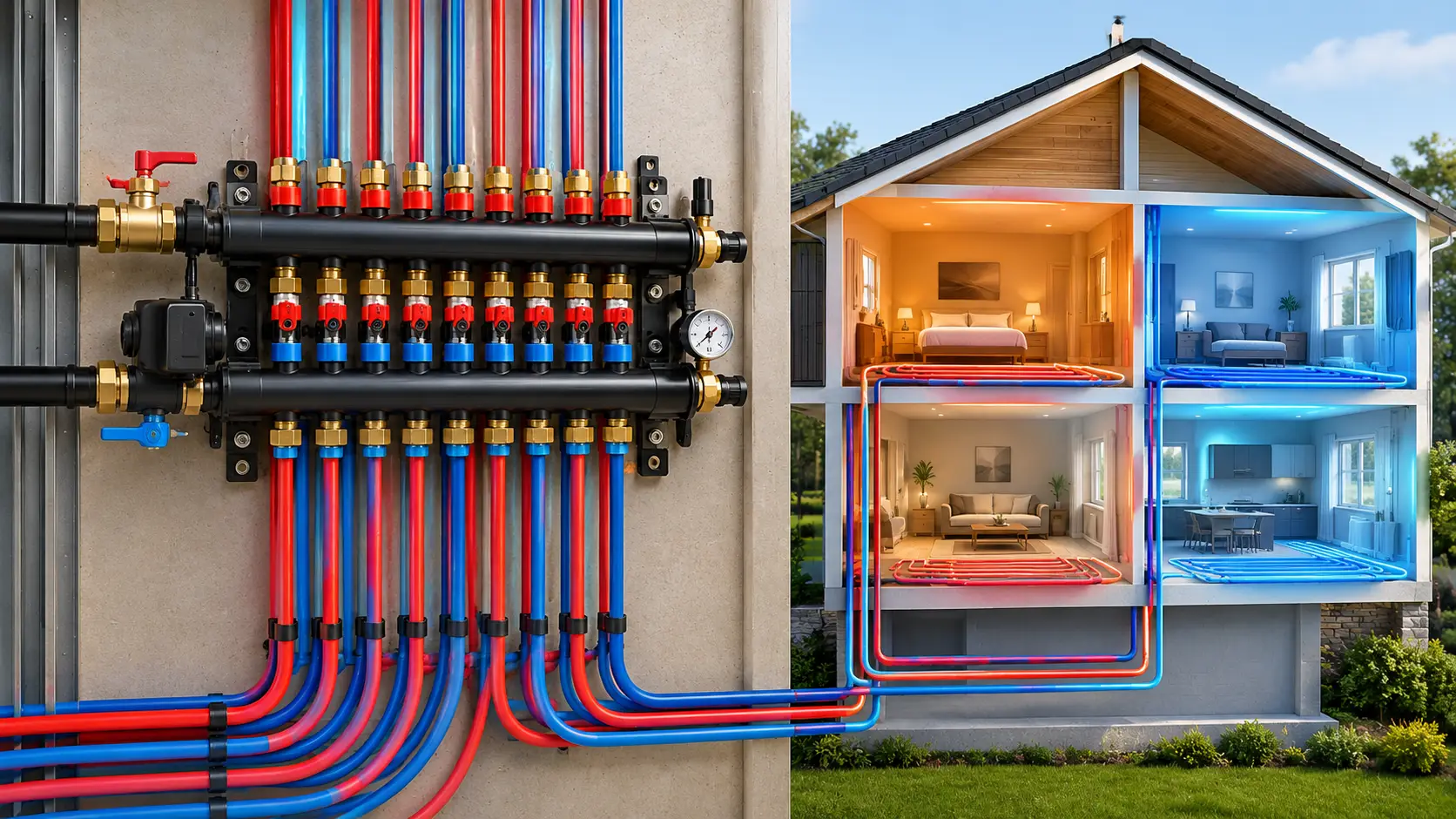
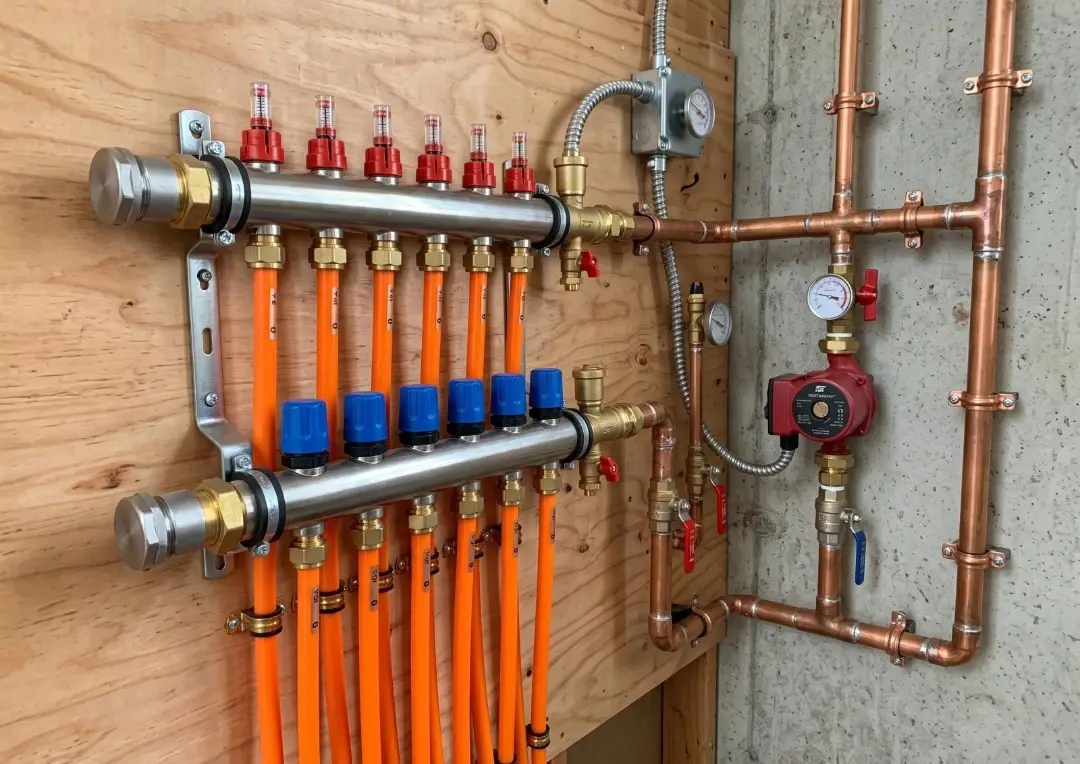
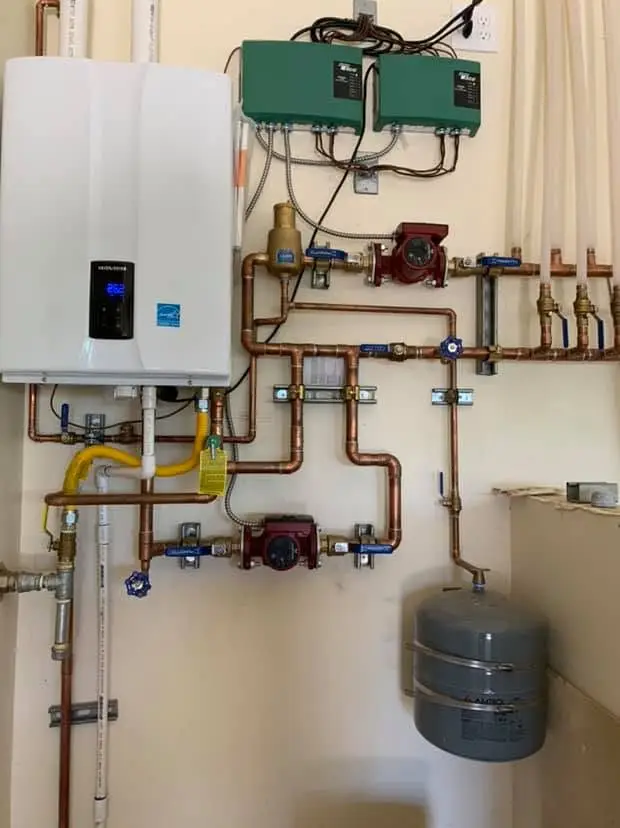
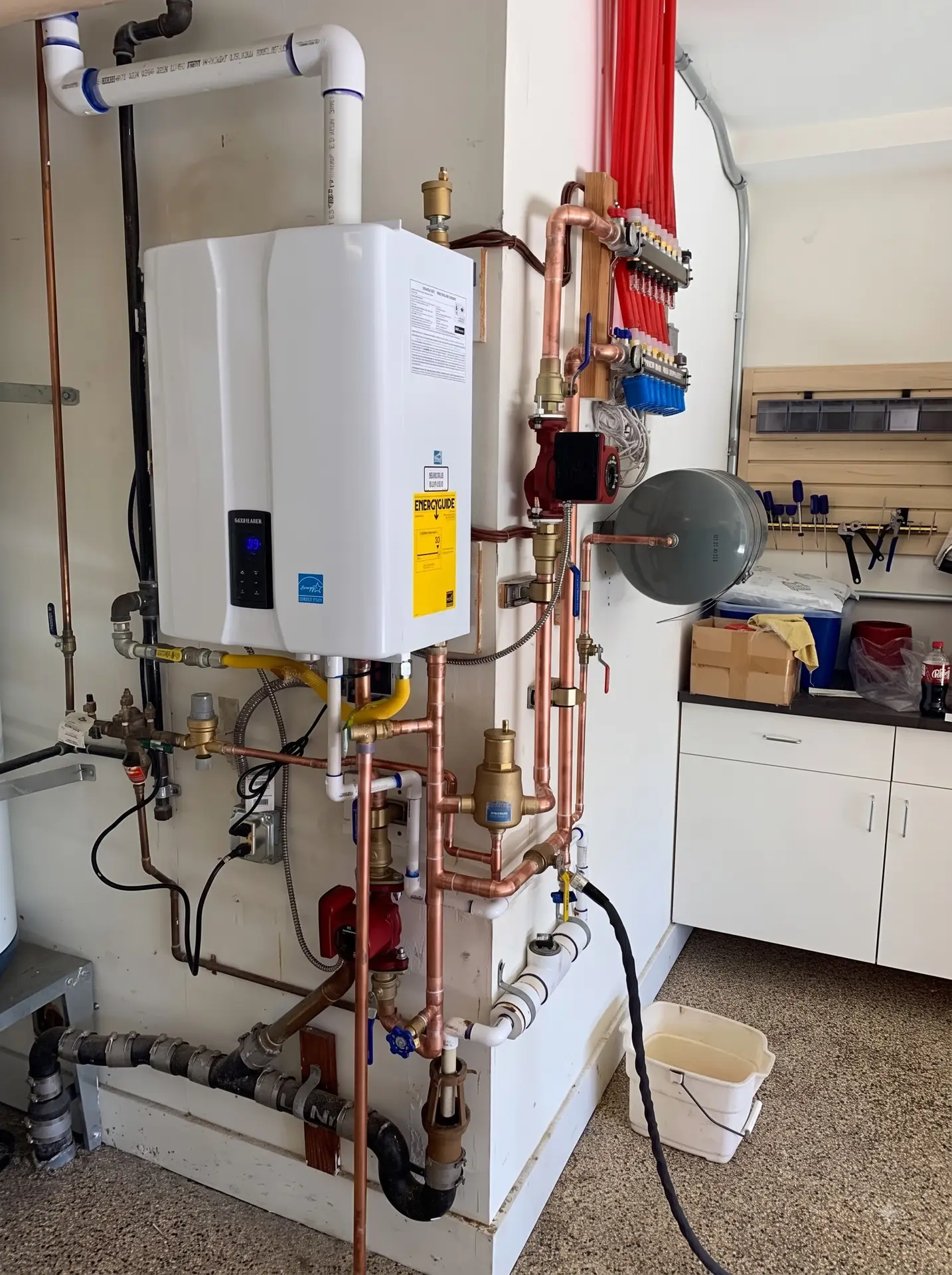
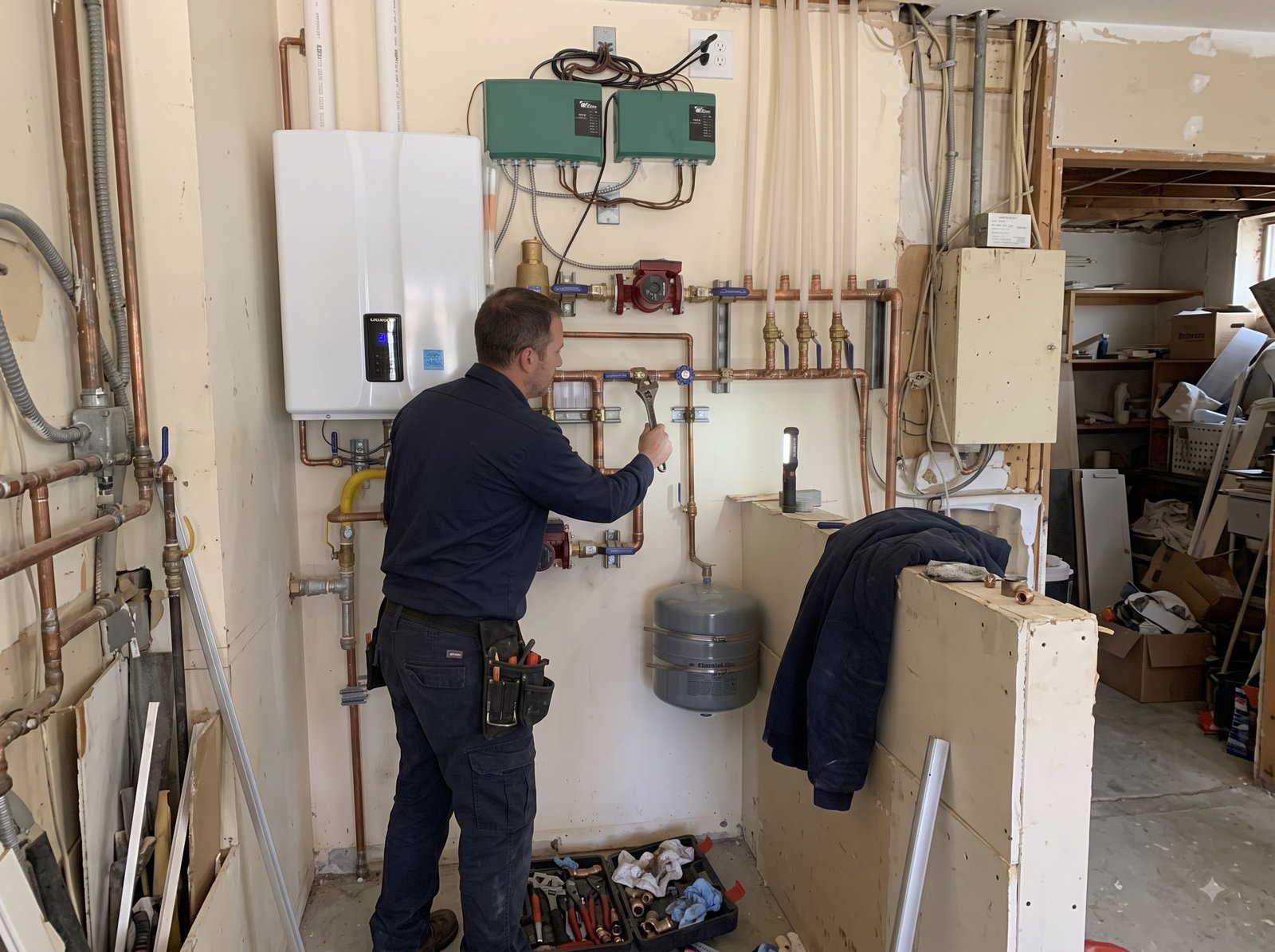
The manifold feeds every loop from one place and lets each one be balanced and isolated. It is also where zoning lives – the reason one end of a house can be warm while the other is left cool, and the first thing we look at when a room never gets there.
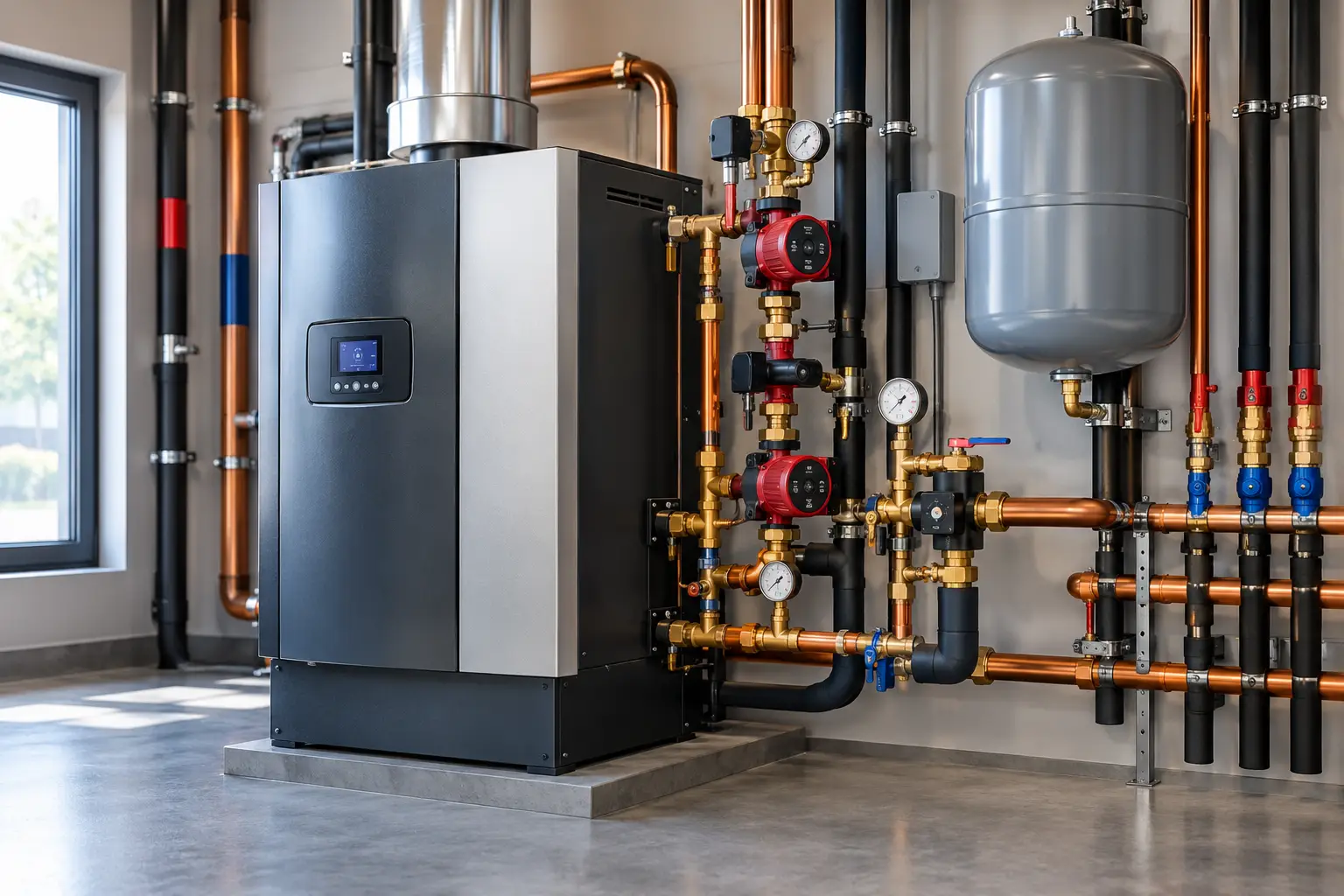
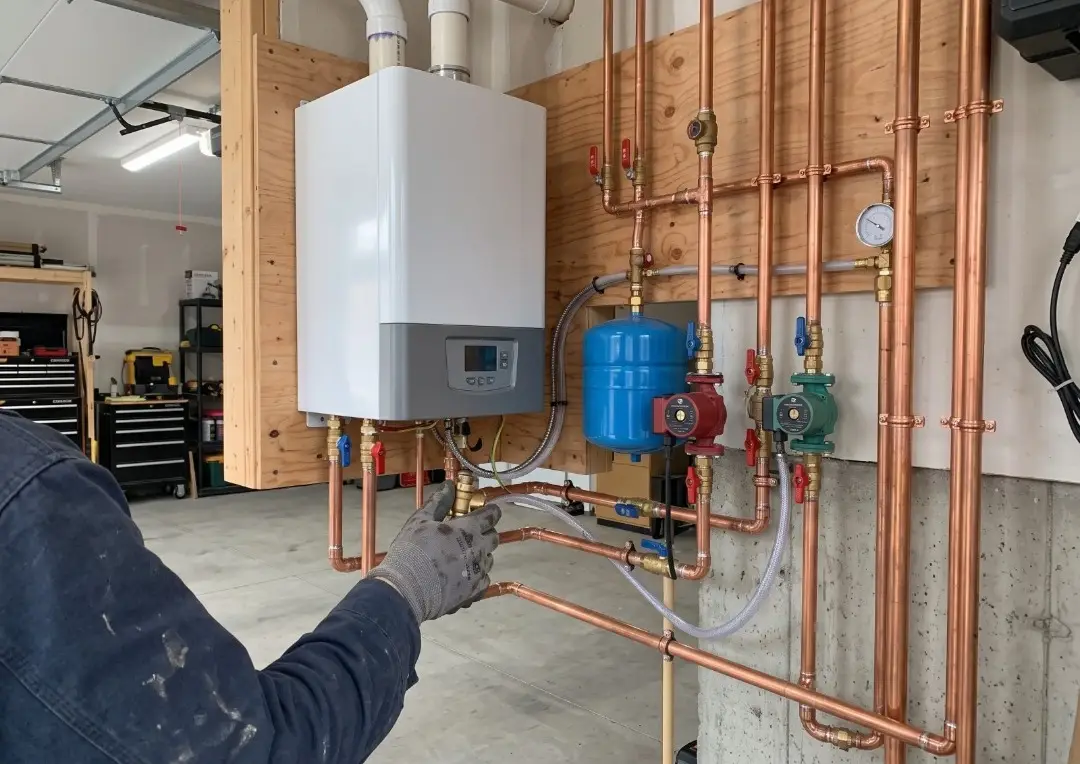
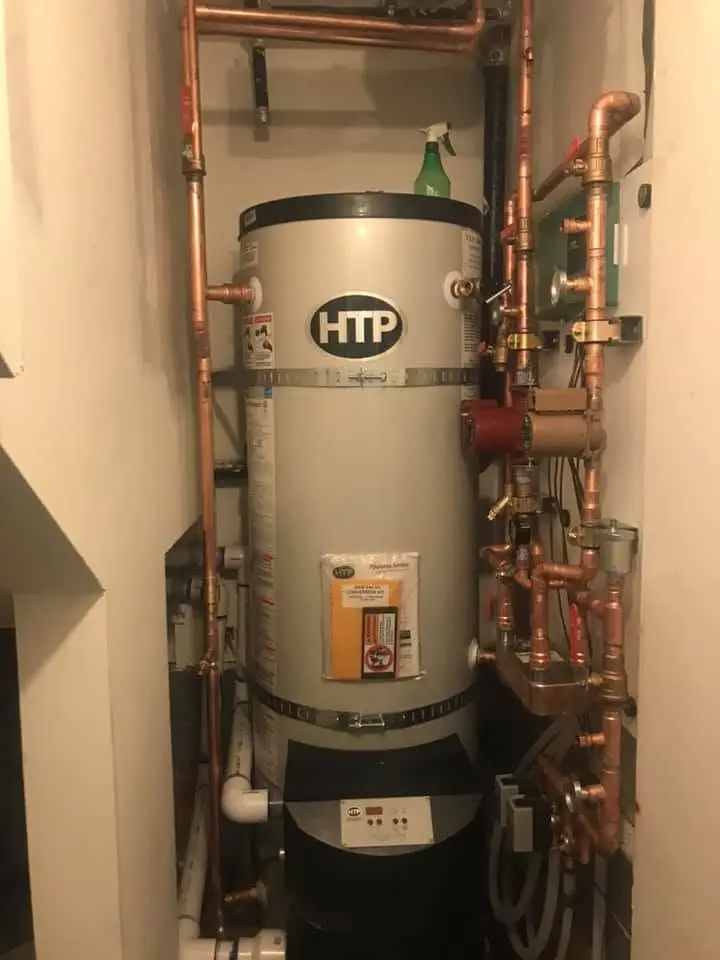
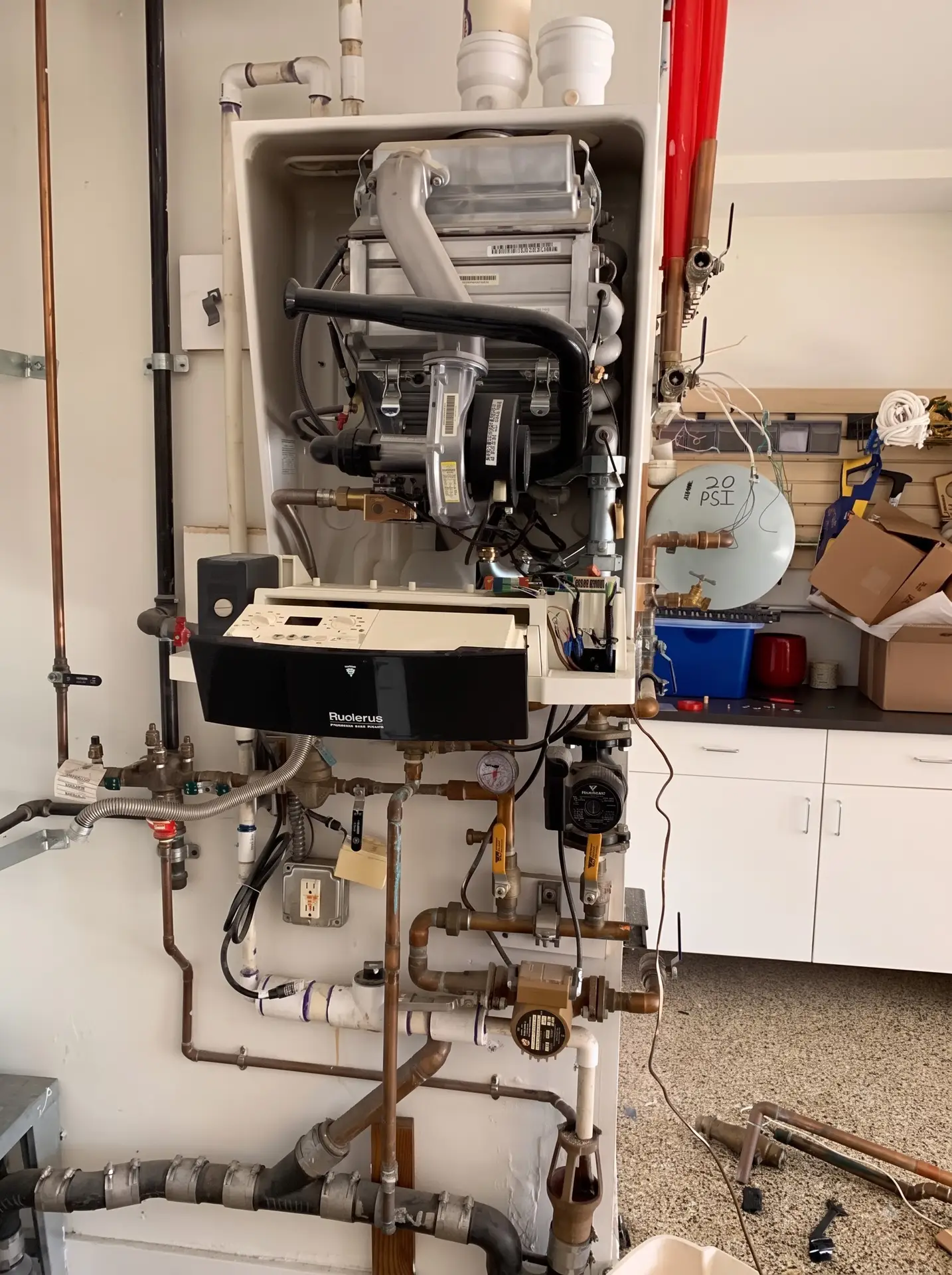
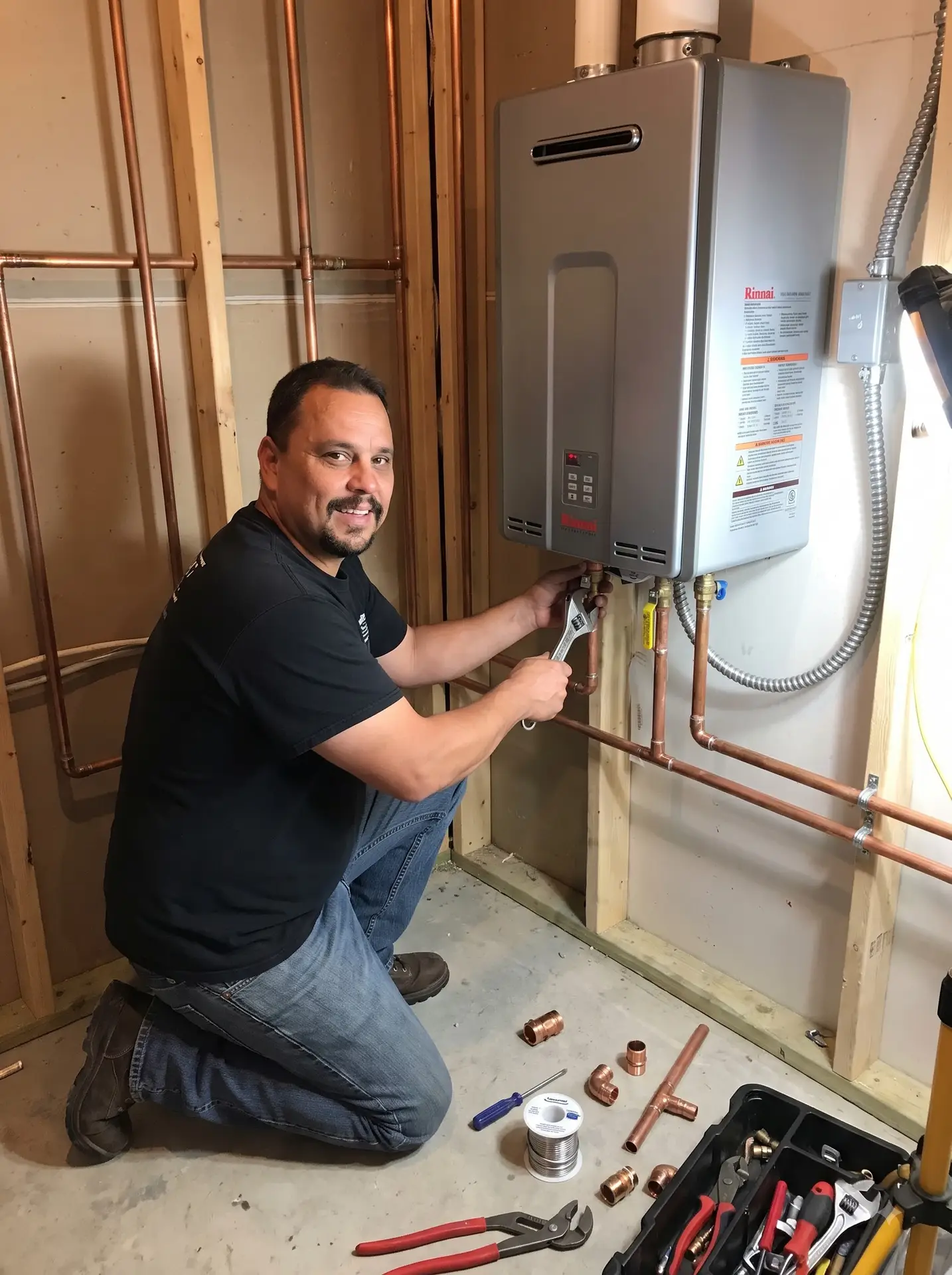
The appliance that heats the water, with its pumps, mixing valves and gauges. Sized to the calculated load rather than to whatever was there before, because an oversized unit short-cycles and costs you comfort as well as money.
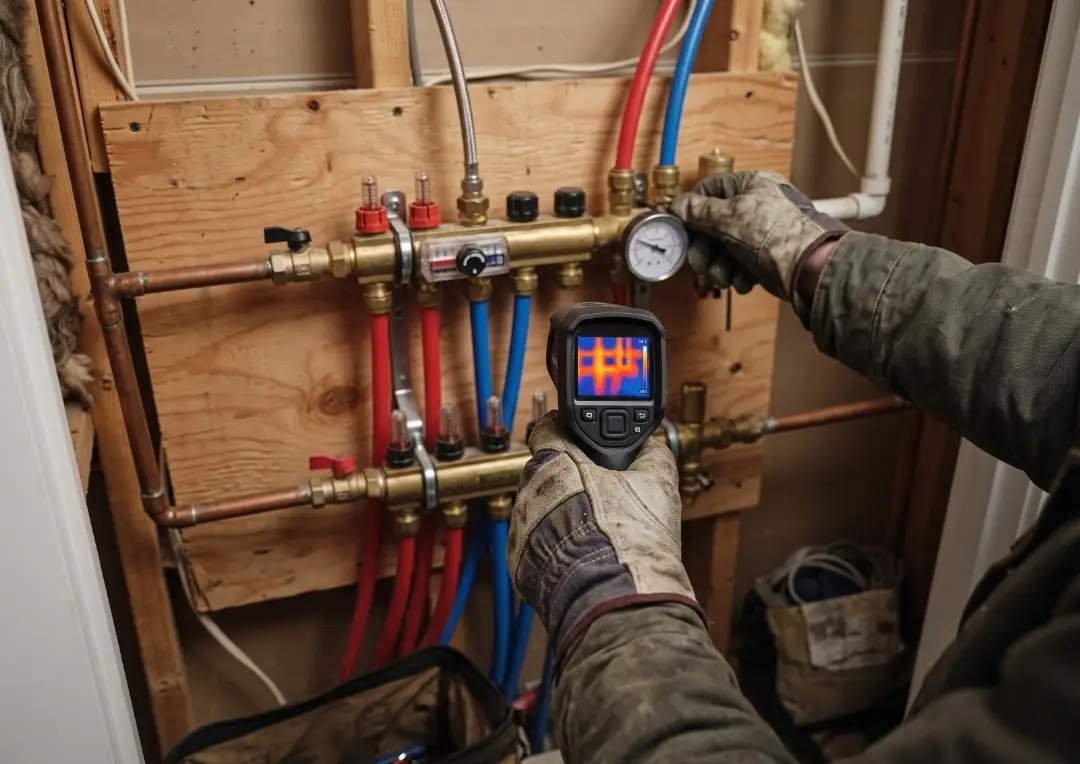
Radiant responds slowly by nature – a slab can take an hour to answer. Set up properly the house simply holds temperature and you stop thinking about it. Set up badly it overshoots and then goes cold, and people blame the floor.
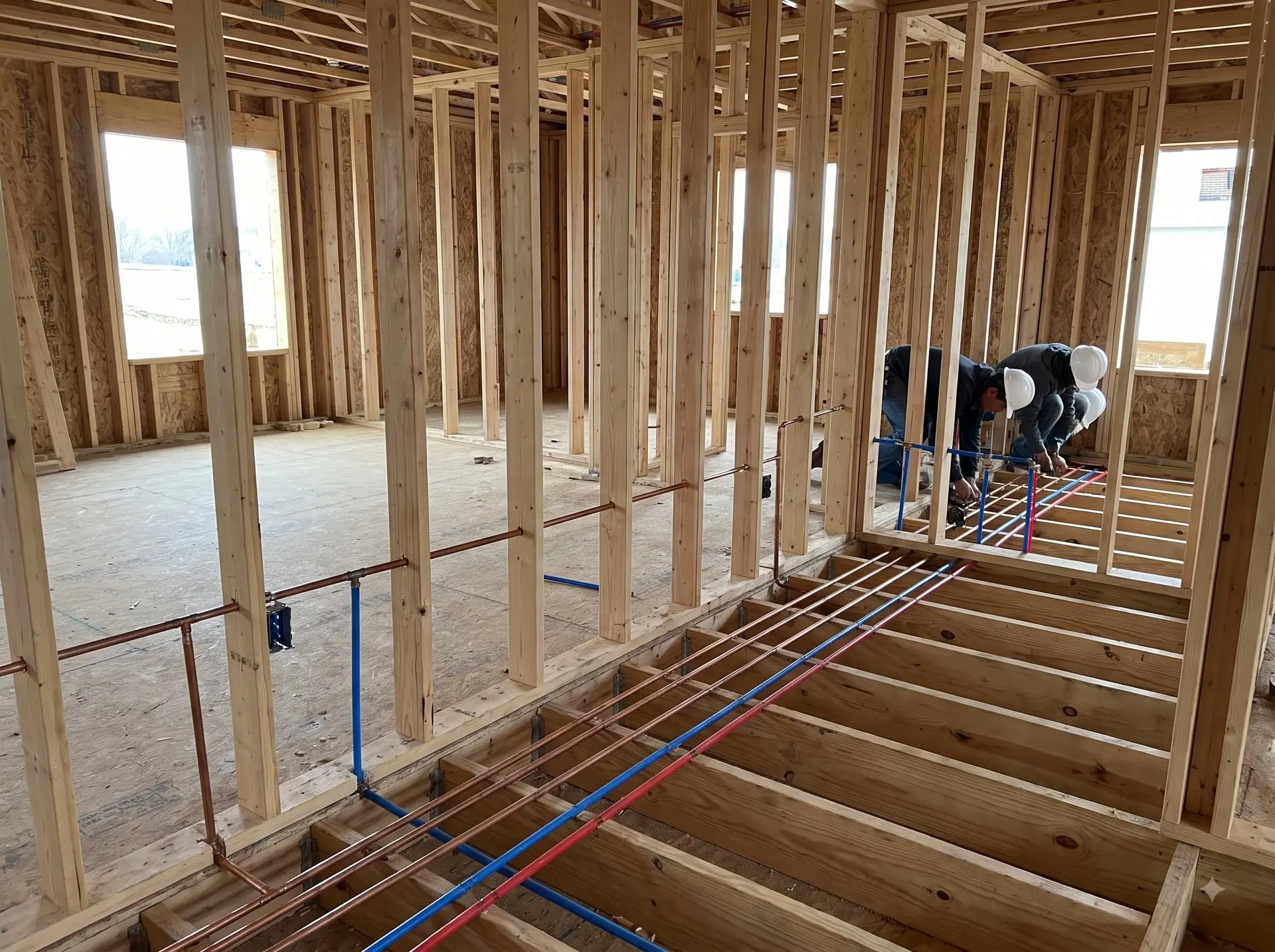
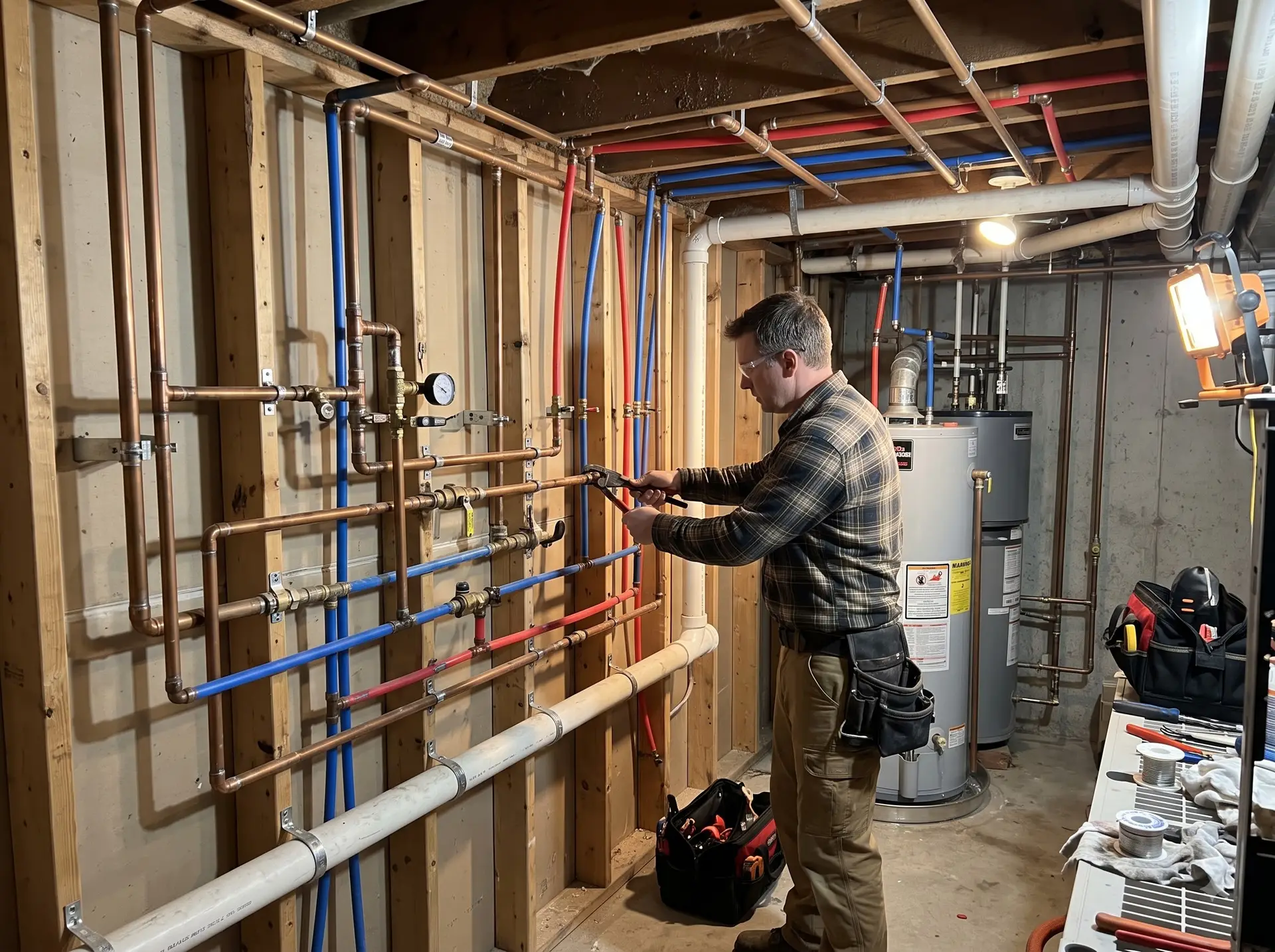
The stage where everything is still possible. Heating pipework and plumbing go in together while the framing is open, which is both cheaper and better than retrofitting either one later. The earlier we are involved, the fewer compromises end up in the design.
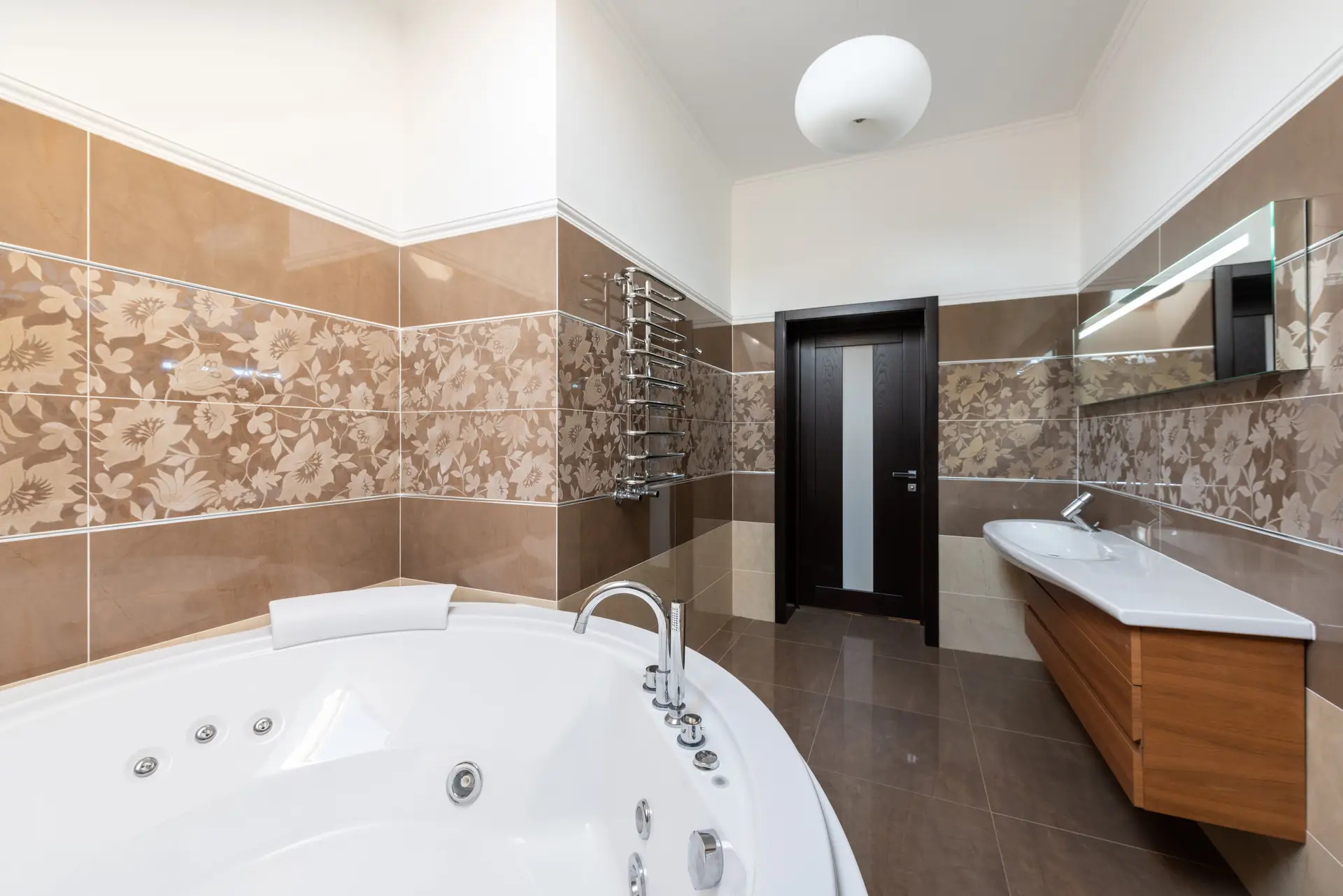
The most common first taste of radiant and the easiest to add during a remodel. A warm tile floor on a January morning is what persuades most people to heat the rest of the house the same way.
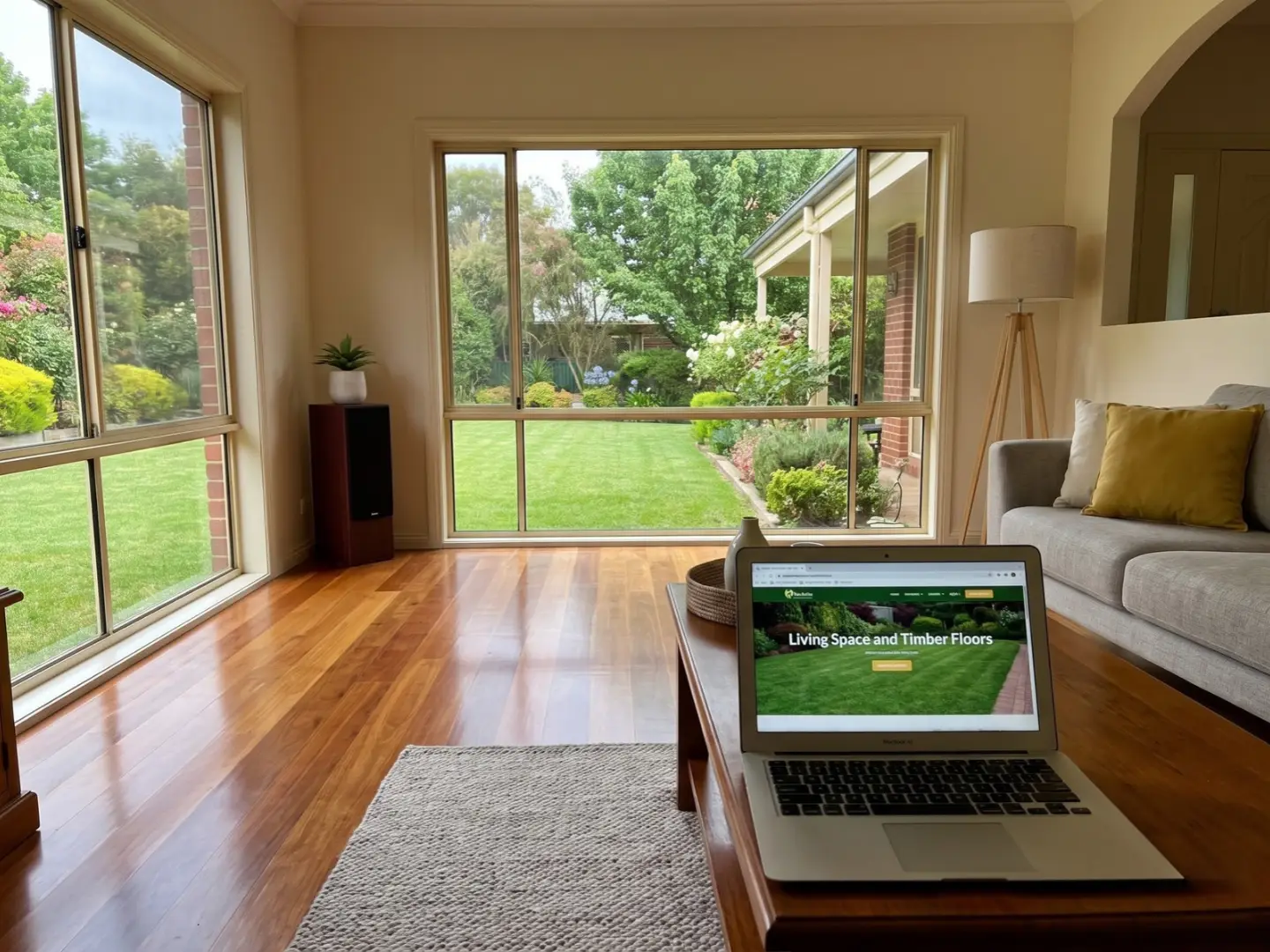
Radiant works under tile, stone, engineered timber and most vinyl. The floor covering changes how much heat gets through, so it is a design input and not a decorating decision made afterwards – tell us the finish before the design.
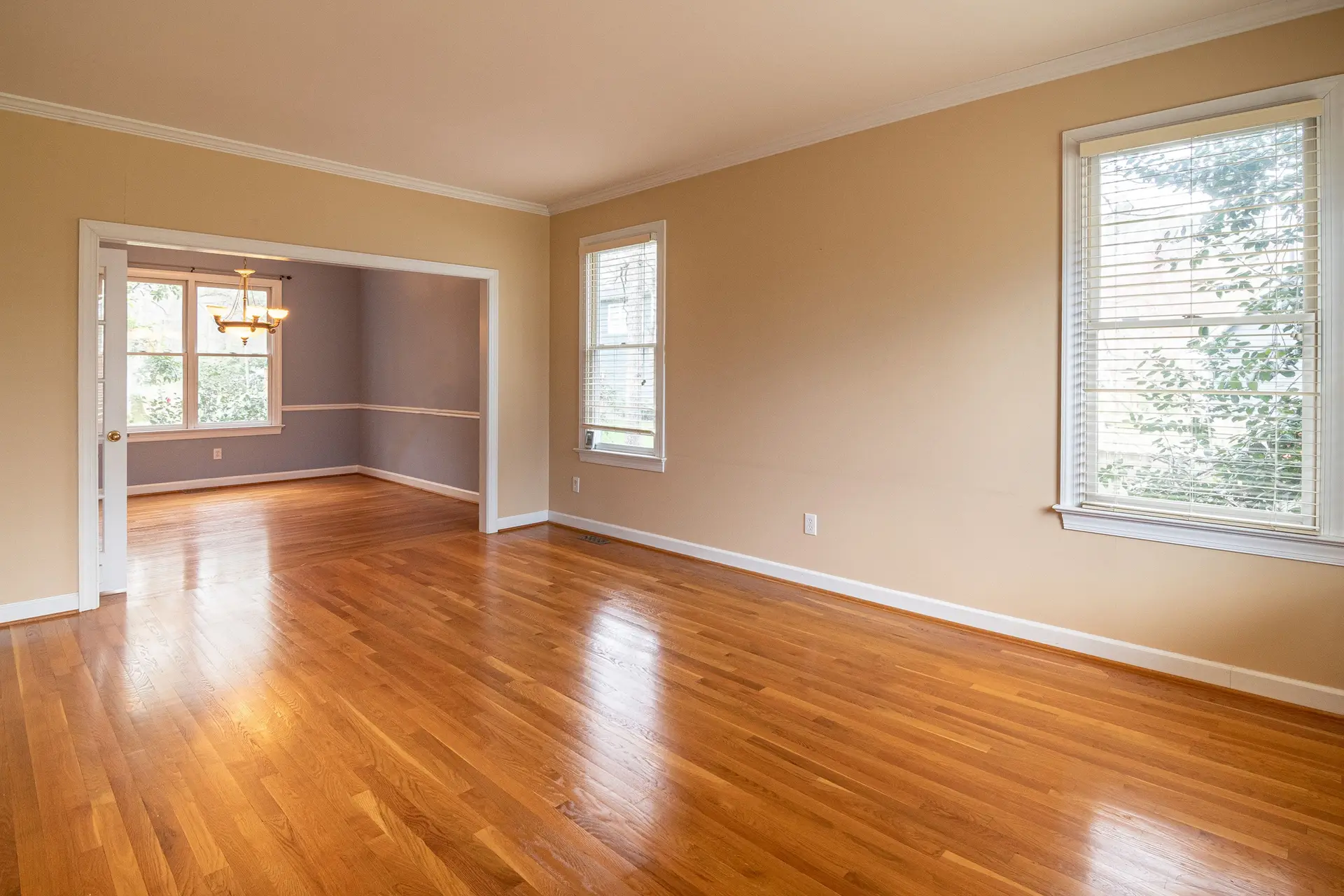
What it looks like when it is done: no vents, no registers, no radiators taking up wall space, and nothing to hear. The entire heating system is under the floor and the room is simply warm.
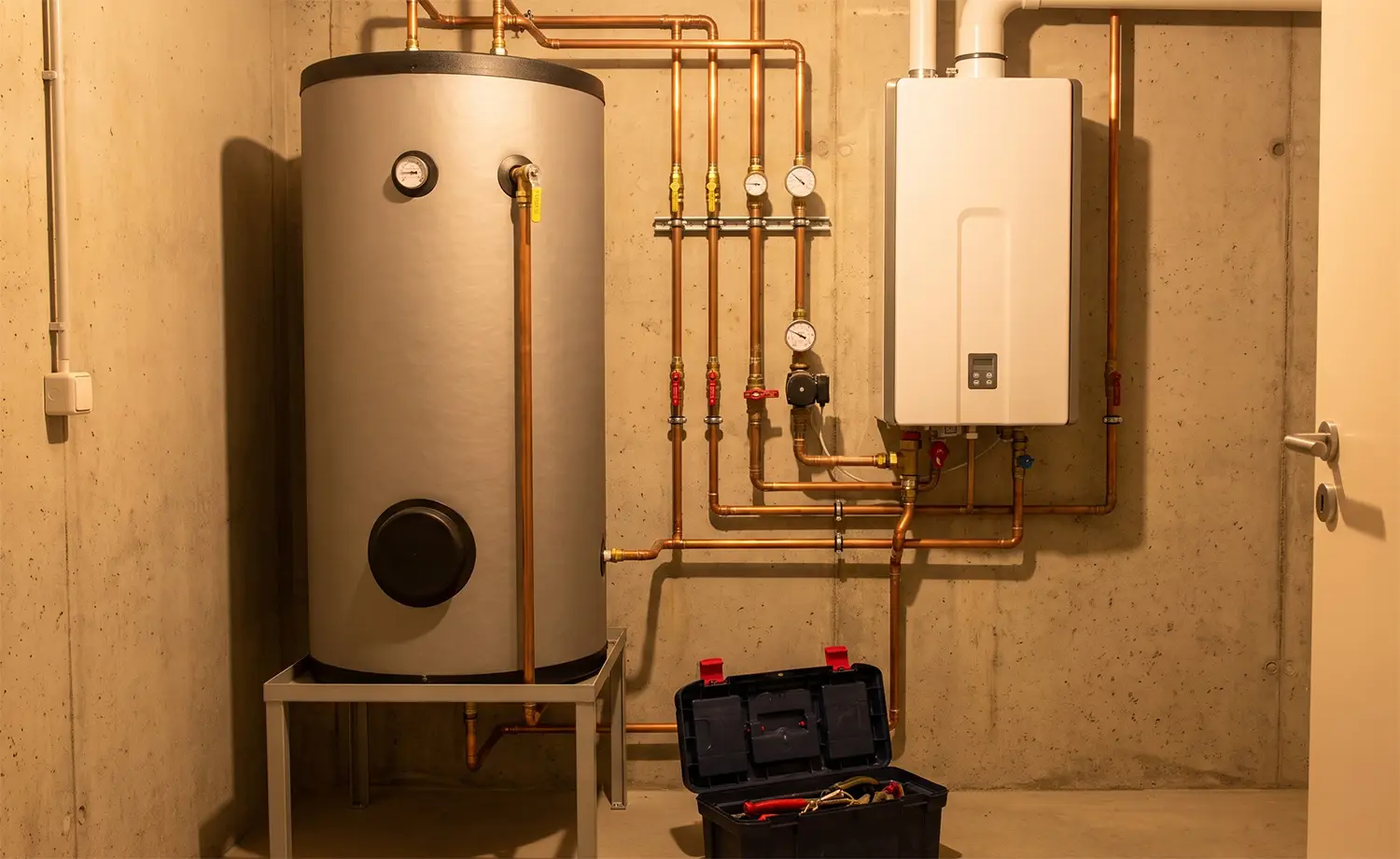
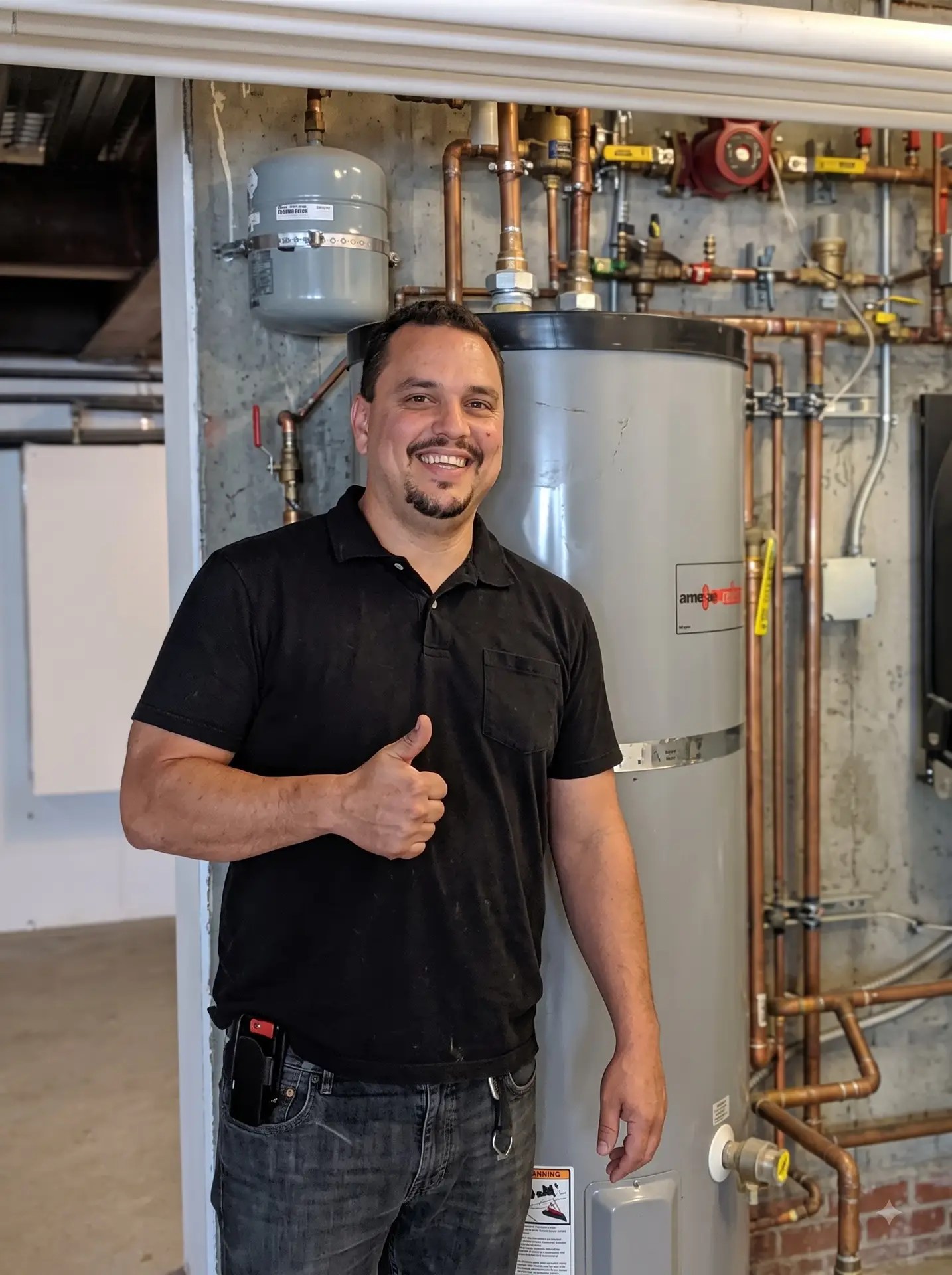
The plumbing half of the same job. Tank and tankless water heating installed, replaced and serviced – and in some combined systems the same appliance serves both the hot taps and the heating.
Tell us what you have, what it is doing, and what you want instead. We will walk the job, explain the options in plain language and put the numbers in writing.